Artist Profile - Claire Griffiths

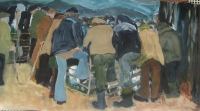
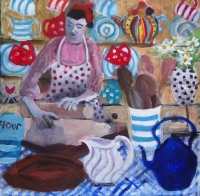
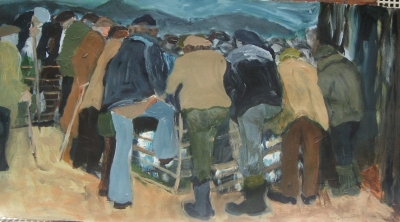
Market Day (drypoint & water colour 48cm x 58cm framed) £135 plus postage

Click for larger image...

Biography
Artist Statement

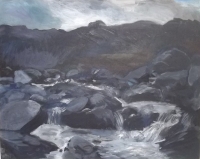
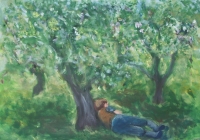
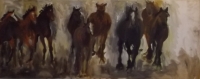
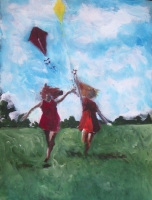
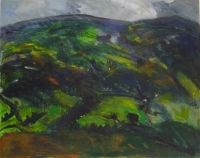
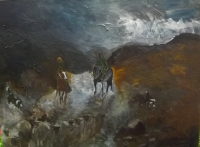
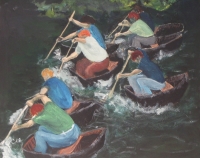
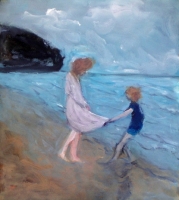
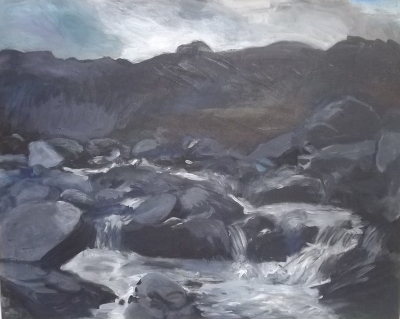
Market Day (drypoint & water colour 48cm x 58cm framed) £135 plus postage Snow Riders (acrylic on canvas unframed 100 x 80cm) £750 plus delivery Cooling Down  (acrylic on canvas unframed 100 x 80cm) £750 plus delivery Gower
Lets go all Exotic (Barrey) Cream tea by the Sea The Cake Gower Window
The Farmer Edition 10 of 50 (drypoint and watercolour 40 x 59cm) £135 plus postage Lets walk down to the Sea (Penmaenmawr) I Draem of the Sea

Biography

Claire was born in North Wales, and studied at the Royal Forest of Dean College. In 1999 she was awarded a Fine Art degree in printmaking by the University of Wales, Cardiff. She has used many mediums in her work but generally draws original pieces in pastel, then creates prints using intaglio methods such as etching and aquatint on copper, lithography on stone, and dry point. Claire’s work is sensitive and elegiac in nature, showing her personal response to the environment from which she draws her work; she finds revelation in the seemingly ordinary, such as domestic scenes, landscape and portraiture. The work also reflects the nature and the history of the post –industrial Welsh Valleys in which she lives and works. She has exhibited widely in the west of the country and her work can regularly be seen in Cardiff and occasionally in London.


Artist Statement

Drypoint, like etching and engraving, belongs to the Intaglio family of printmaking, but is much more simple and direct than its relatives. In drypoint the surface of the plate is scratched, gouged, punctured, scraped or abraded, but the material itself is not removed, it is just pushed to the side, forming a kind of curl. Thus the lines will present a metal burr which, when looked at through a magnifying glass, shows up as a kind of broken metallic wave, like the ridges of a ploughed field. It is this 'burr' which holds the ink, and gives a drypoint line, or area, its typical velvety appearance. The great attraction of drypoint printmaking, for artists of all levels and disciplines, is its simplicity. Materials and tools are cheap and easy to come by and the process itself couldn't be more straightforward, so much so that drypoint plates can be produced on the kitchen table! No acid baths are required, as in etching, no consummate specialist skill is necessary, as in engraving, and results are quickly achieved. In addition, drypoint work is absolutely ideal for combining with other printmaking techniques, such as etching, monotype, chine collé and collagraph / carborundum printmaking, and is perfect for further work, by hand, in watercolour, gouache or coloured inks.